
About Us
kimagaran raztabiat
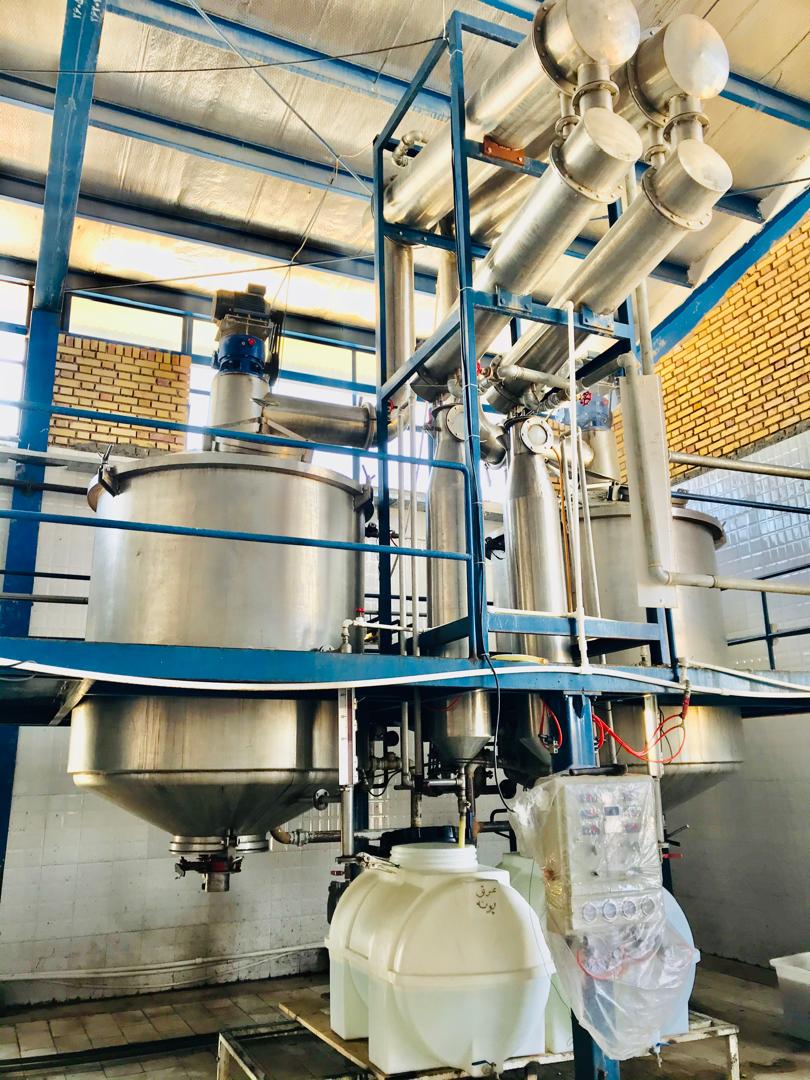
The Jajarm medicinal plant processing plant—the first of its kind in North Khorasan Province—was established in the Jajarm Industrial Estate on a 12,400-square-meter site, having secured the necessary permits in 2011. Following three years of effort, and upon the completion of a 1,600-square-meter facility and the installation of required machinery, production lines for herbal distillates, extracts, extract powders, essential oils, and herbal infusions were commissioned in February 2016.
Concurrently with the construction of the aforementioned factory in 2012, Kimiagaran-e Raz-e Tabiat Company obtained a license and commenced operations at the Mashhad Agricultural Technology Incubator, focusing on the formulation of herbal medicines as well as health and cosmetic products. Over a period of more than three years, the company formulated and produced 45 types of products—comprising 22 types of creams, six types of gels, three types of shampoos, and 14 types of herbal tablets—which are currently being manufactured at a semi-industrial scale in Phase 2 of the Raz-e Tabiat factory.
Phase 1 of the Raz-e-Tabiat industrial facility houses production lines for medicinal plant products—such as herbal distillates, essential oils, and extracts—with an annual capacity of approximately 500 tons of distillates, 300 tons of extracts, and 3 tons of essential oils; in total, the facility produces over 50 varieties of herbal distillates (both blended and single-herb), 40 types of extracts, and 15 types of essential oils.
این شرکت عضو انجمن کیفیت ایران بوده و موفق به اخذ استاندارد ISO9001 گردیده است.
Get the Raz-e-Tabiat Company Catalog
امکانات زیربنایی و تجهیزات
- زمین به مساحت 1/2 هکتار در شهرک صنعتی جاجرم
- 2 سوله با زیربنایی به مساحت 1200 متر مربع
- Laboratory equipped with the necessary apparatus to conduct required microbiological and chemical tests.
- Distillation equipment (two 3-tonne units, one 1-tonne unit, and one 500-liter unit)
- 2-ton boiler, compressor, and water softener
- RO water purification system
- Pasteurizer and water cooler
- Filling machines (three 8-nozzle units and two single-nozzle units)
- Shrink-wrapping machine
- Inkjet printer
- Tablet press machine
- Mixing and filling machines for the production of creams, gels, shampoos, and similar products.
Areas of Activity for Raz-e-Tabiat Company in Phase 1
(Processing of Medicinal Plants)
- Production of herbal distillates and rose water
- Production of herbal extracts and extract powders (food grade)
- Production of herbal extracts and extract powders (pharmaceutical grade)
- Production of plant essential oils
- Production of herbal syrups (food grade)
- Production of herbal infusions
- Production of apple cider vinegar, lemon juice, etc.
Areas of activity for Raz-e-Tabiat Company in Phase 2
.
- Production of personal care products (herbal creams)
- Production of hygiene products (herbal gels)
- Production of personal care products (herbal shampoos)
- Production of personal care products (herbal lipsticks)
- Production of herbal tablets and capsules
- Production of herbal syrups (pharmaceutical grade)
Operational activities
Phase 1
- Production of over 80 types of single and blended herbal distillates.
- Production of over 14 types of single-origin and blended rose water across various grades.
- Production of over 20 types of extracts and extract powders from medicinal plants.
- Production of over 10 types of essential oils from medicinal plants.
Phase 2
- Acquiring technical know-how and producing 23 types of herbal creams.
- Acquiring the technical know-how and producing 18 types of herbal tablets.
- Acquiring technical know-how and producing six types of herbal gels.
- Acquiring technical know-how and producing four types of herbal shampoos and lotions.
Permits obtained
- Obtaining the establishment permit for Phase 1 and 2 products.
- Obtaining the industrial operation license for Phases 1 and 2
- Obtaining the sanitary operation license for Phase 1 (Phase 2 is underway)
- Obtaining the “Health Apple” (manufacturing license) for single-origin and blended rose waters.
- Obtaining the “Health Apple” (manufacturing license) for single-herb and blended herbal distillates.
- Obtaining export codes for the export of rose water and herbal distillates.
- Obtaining PRP status to offer spare capacity for herbal distillates.
Standards and ISO certifications obtained
- Obtaining the national standard mark for rose water and several types of herbal distillates.
- Obtaining ISO 9001:2008 certification
- Obtaining ISO 2200
- Obtaining HACCP Certification
- Obtaining Halal certification